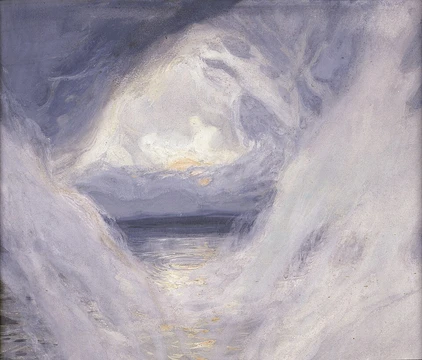
The Creation structure
Oratorio in three parts on Genesis and Paradise Lost.
The Creation (Die Schöpfung) is an oratorio by Joseph Haydn, composed in 1796–1798 on a German text. The work is structured in three parts, set for soloists, chorus, and orchestra. Its movements are listed in tables for form, voice, key, tempo marking, time signature, and source.
- Composer
- Joseph Haydn
- Work
- The Creation (Die Schöpfung)
- Composed
- 1796–1798
- Parts
- Three
- Text Language
- German
- Forces
- Soloists, chorus, orchestra
- Libretto Source
- Book of Genesis, Psalms, Paradise Lost
Lore & Background
The libretto's origin is not known. Haydn received the booklet in English in London in 1795 from his impresario Johann Peter Salomon. According to Haydn, it was passed by a certain Lidley, or perhaps Thomas Linley, and was attributed to him, but may be written by an unknown author. Back in Vienna, Haydn passed it to Baron Gottfried van Swieten, who translated and organized it. The sources are the two Creation narratives from Genesis, some Psalms, and John Milton's Paradise Lost.
The oratorio has five solo roles: in Parts I and II the archangels Gabriel (soprano), Uriel (tenor), and Raphael (bass); in Part III Adam (bass) and Eve (soprano). The final movement needs an additional alto soloist. The chorus is SATB. Haydn used three soloists; some conductors prefer different soloists for Adam and Eve.
Haydn set most narration in secco recitative, with exceptions for the two recitatives opening Parts I and II, which are accompanied. For each day, recitative is followed by contemplation in accompanied recitative and aria, affirmed by a choral movement. Haydn saves the soprano voice for a late appearance, having Gabriel be the first to proclaim the wonder. The orchestra plays a decisive role in word painting, imitating birds, the lion, and Paradise.
Reader's Guide
The Creation is structured in three parts: Part I covers the Creation of the universe and plants; Part II covers the Creation of animals, and of man and woman; Part III covers Adam and Eve in Paradise. The work uses vocal means of contemporary opera—recitative, aria, ensemble, and chorus—with the orchestra playing a decisive role in structure and tone painting. Haydn strives for interaction of solo and chorus, as in his late Masses and contemporary opera, differing from Handel's separation of solo and choral singing. The conclusion of Part I, 'Die Himmel erzählen die Ehre Gottes,' covers Psalm 19, with soloists singing verse 2 to each other, leading to a choral repetition and an elaborate fugue. In 'Vollendet ist das große Werk,' the chorus frames a slow trio section with two fast movements. The work's legacy lies in its unsullied optimism, expressed in life-affirming music.
Did You Know?
- The libretto may have been written by an unknown author, possibly passed by a certain Lidley or Thomas Linley.
- Haydn saves the soprano voice for a late appearance, with Gabriel first to proclaim the wonder.
- The orchestra imitates birds with flute and clarinet, and the lion with trombones and contrabassoon.
- The final movement requires an additional alto soloist beyond the five main solo roles.
Frequently Asked Questions
What is The Creation structure in Haydn's oratorio?
It refers to the three-part architectural framework of Die Schöpfung, the oratorio Haydn composed between 1796 and 1798. Each of the three parts groups a set of movements that together narrate the Genesis account of creation and the fall of Adam and Eve.
What forces perform The Creation structure?
The score calls for solo vocalists, a full chorus, and a complete orchestra. This combination allows Haydn to shift between intimate recitatives, large-scale choral declarations, and purely orchestral passages across all three parts.
What text underlies The Creation structure?
The libretto is written in German and draws its narrative from the Book of Genesis, supplemented with passages inspired by John Milton's Paradise Lost. This dual literary source gives the three parts their dramatic arc from cosmic creation to humanity's fall.
How are the movements within The Creation structure organized?
Each movement is catalogued by its formal type, vocal or instrumental forces, key, tempo marking, time signature, and the specific text source it sets. These tables let listeners and scholars see how Haydn balanced arias, choruses, and orchestral interludes across the three parts.
Why is The Creation structure considered significant in the oratorio tradition?
Haydn's three-part design became a model for later large-scale sacred works because it pairs a clear dramatic storyline with richly varied musical forms. Its balance of solo, choral, and orchestral writing set a standard that composers like Beethoven and Brahms later referenced when structuring their own oratorios.
More in Genesis creation narrative 1-24
Spotted an error? Know more?
This is a living reference — every entry is fact-audited, and reader corrections feed straight into our audit queue. Suggest an edit · See this site's audit record